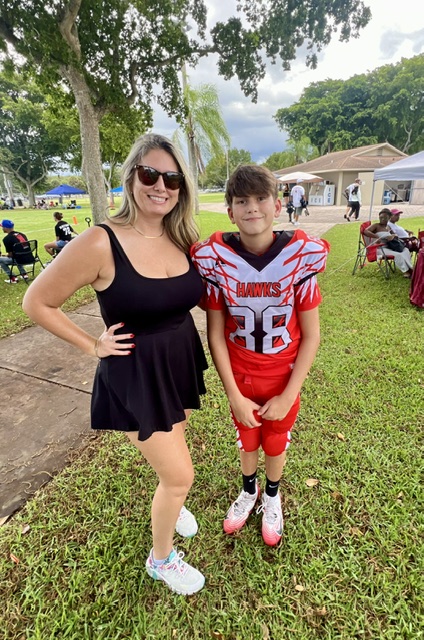
Last week I dropped my son off for his first day of high school.
He got out of the car with his backpack on one shoulder, said a quick "bye, Mom," and walked toward the doors with a crowd of kids he mostly didn't know yet. I sat there for a second longer than I needed to, watching him disappear into the building, wondering what was going through his head.
Was he nervous? Excited? Trying to figure out where to sit at lunch before he'd even made it to first period? Probably all three, in some order, cycling on repeat.
I know that feeling. Most of us do. That specific mix of hope and dread that shows up whenever we're the new person walking into a room full of people who already know each other.
A Feeling We Never Outgrow
We like to think that once we're adults, that particular kind of nervousness disappears. We graduate, we get our first job, we figure out who we are, and somewhere along the way we assume we stop needing to be picked. That the wondering fades.
It doesn't.
Every person who has ever started a new job has felt some version of what my son felt walking through those doors. It doesn't matter if they're twenty-two or fifty-two, if it's their first job or their eighth. Walking into a new workplace, a new team, a new set of unwritten rules, brings the same undercurrent of nerves that walking into a new school does. We just get better at hiding it.
Every New Employee Is Quietly Asking the Same Question
Most companies spend a lot of time onboarding people to systems. Where the login is. How to submit a request. Who to CC. All necessary, none of it wrong. But it misses what's actually happening underneath, which is that every new hire is silently working through a much more personal set of questions:
- Do I fit in here?
- Can I ask questions without it costing me something?
- Will these people actually like me?
- Did I make the right decision taking this job?
Nobody says these things out loud in a first-week meeting. But they're there, running quietly in the background while someone is nodding along to a presentation about the expense reporting policy.
Belonging Happens Before Engagement
Organizations pour a lot of energy into onboarding people operationally. Fewer put the same intention into onboarding people emotionally, and that's usually the piece that determines whether someone actually stays.
It shows up in small things. Whether the first conversation with a new hire feels like a formality or feels like someone is genuinely glad they're there. Whether introductions happen in a way that makes someone feel like part of the team, or just like a name added to a directory. Whether anyone thinks to invite the new person to lunch instead of letting them eat alone at their desk on day three.
None of this requires a program. It requires people who are paying attention.
People don't stop needing encouragement just because they became adults.
Culture Is Built in Small Moments
I've spent years working with organizations on their culture, and if there's one thing I keep coming back to, it's that culture is almost never built by the mission statement on the wall. It's built in the hallway. In the small moments nobody puts on a slide.
A smile from someone in a meeting who didn't have to acknowledge you. A conversation that goes a beat longer than it needed to. Someone recognizing effort before it turns into results. A leader who stays curious about a person instead of just their output. All of it adds up to something bigger than any individual gesture, which is a workplace where people feel safe enough to actually be themselves.
That's psychological safety, and it's rarely built with a single event. It's built one small, human moment at a time.
Whether someone is fourteen or forty-four, they're asking the same question the moment they walk through a new door.
"Is this a place where I belong?"
As leaders, we answer that question every single day, whether we realize it or not.